Contact Us
1 Pickle Mews, London, SW9 0FJ
How VR Medical Training is Accelerating the NHS’ Road to Net Zero
Published
Jul 16, 2025
Tags
It’s imperative the NHS continues to prioritise its net zero journey and builds momentum by adopting VR medical training, a powerful catalyst for sustainable healthcare education.
It is commonly acknowledged that the most significant risk to global human health is the progressively worsening climate crisis.
The correlation between environmental quality and human health is inextricably linked. Research has investigated the correlation between environmental exposures such as toxic chemicals and air pollution in relation to their impact on human health, but also conversely how a healthy environment enhances people’s physical and mental wellbeing. One always impacts the other, so it’s imperative the NHS continues to prioritise its net zero journey and builds momentum through adopting innovative technology.
Enter virtual reality: a technology that is emerging as a potentially powerful catalyst for sustainable healthcare transformation.
The NHS’ Sustainability Challenge
As it stands, the NHS’ carbon footprint is expansive. Accounting for 4-5% of the total UK carbon emissions and NHS England alone is responsible for 40% of the public sector’s emissions. The scale is extensive, and despite ambitious national commitments, the British Medical Association, Public Health England, the British Medical Journal, and the National Institute for Health and Care Research unanimously declare that further work is required if the NHS is to achieve net zero for both direct and indirect emissions by 2045.
In the initial phases of the sustainable transition, NHS trusts opted for tried-and-true approaches, such as converting to renewable energy or reworking their procurement framework. However, in the next phase, the adoption of innovative technologies will be crucial to support carbon reduction across all facets of the organisation. Carbon reduction will need to be considered at a minute level, investigating all possible areas where carbon can be incurred. Take a surgery for example, it incurs carbon emissions through the energy consumption of the operating theatre, the medical equipment applied, even the commute of doctors, medical professionals, and patients involved in the procedure. This demonstrates that sustainability needs to be considered at every stage, even in overlooked areas like medical training.
How VR medical training can accelerate the road to net zero
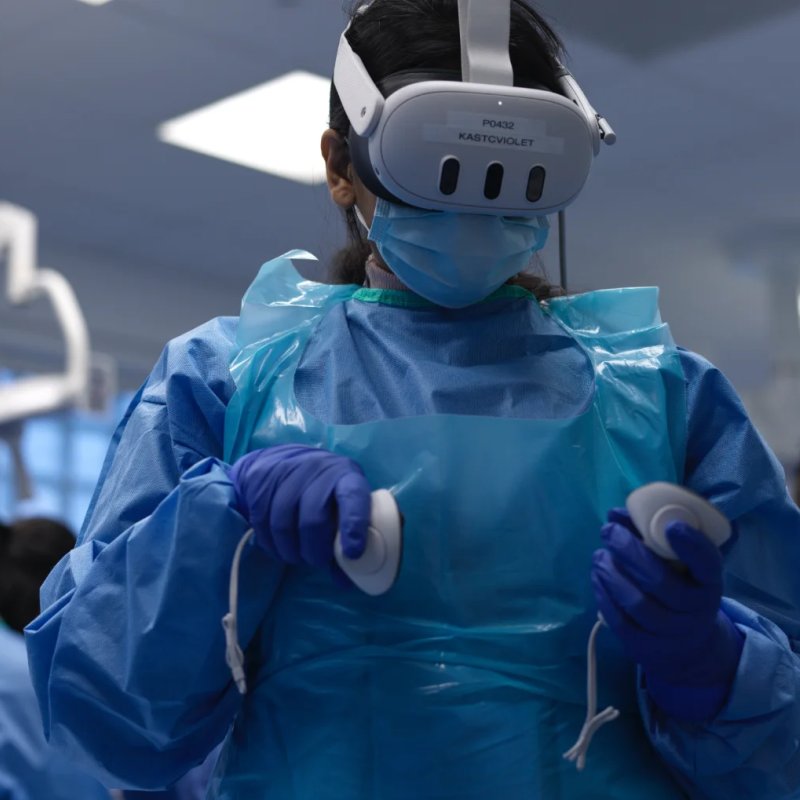
VR is addressing the pressing need for a training format that aligns with the growing sustainability agenda. It could allow the NHS to evolve its traditional training methods to a remote format, that offers a considerably lower carbon footprint.
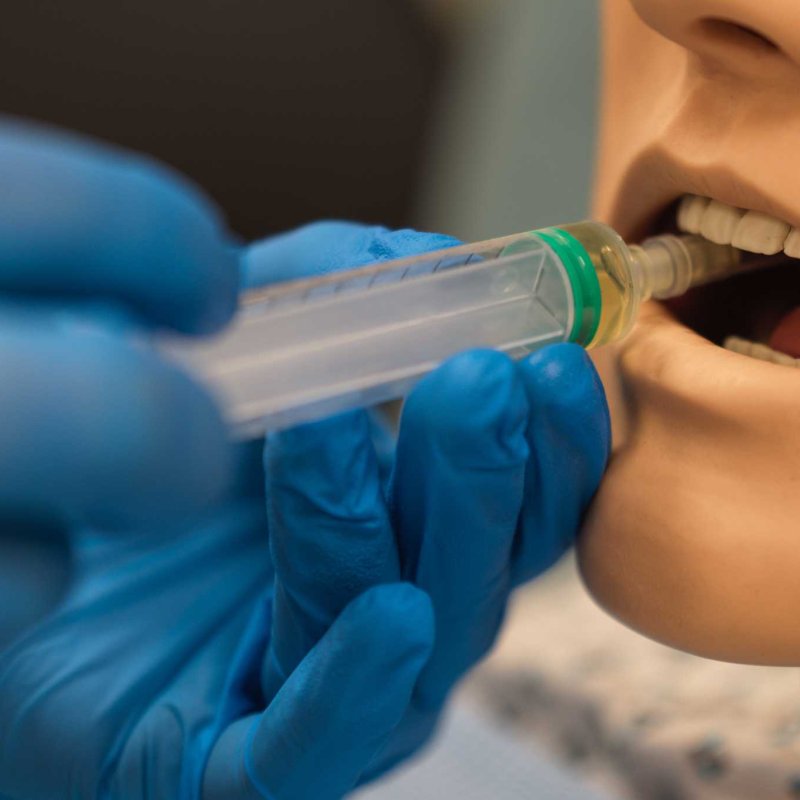
Traditional training methods involve a demonstration and possible participation in a real-life medical scenario. This format is heavily resource-intensive, requiring:
- Physical travel from both trainers and trainees, and possibly even patients
- Energy to supply the simulation areas
- Single-use personal protective equipment (PPE) or medical equipment
- Logistics surrounding MedTechs or equipment needed only for training purposes
Due to limited capacity of in-person training, and long-term knowledge retention of key procedural skills, it will be necessary to conduct medical training courses repeatedly to ensure all trainees receive training, further exacerbating the sustainable challenge.
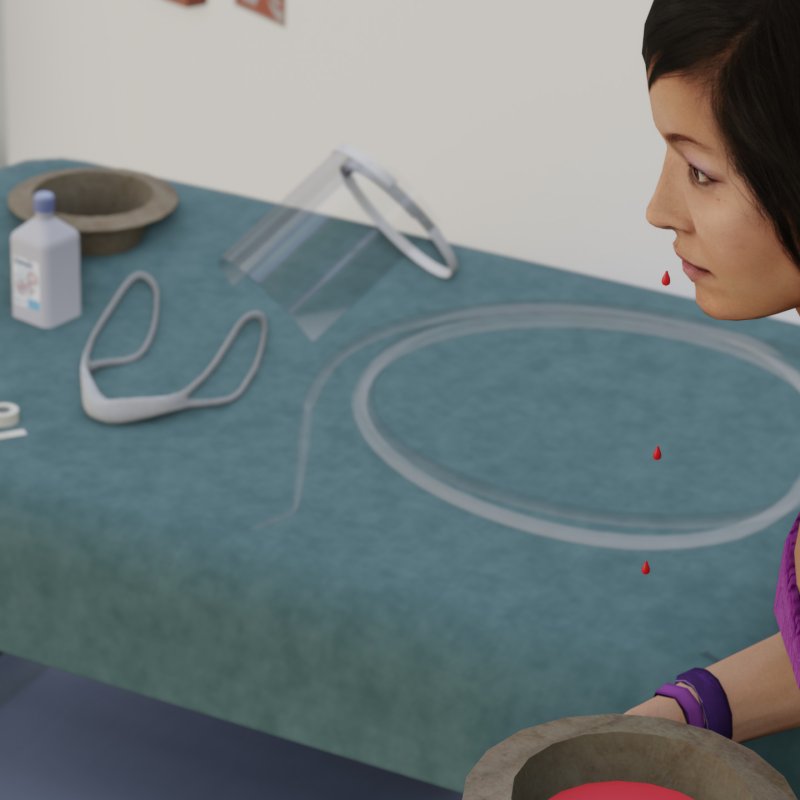
However, delivering medical training through virtual reality can considerably reduce resource requirement, and thereby emissions of training. Virtual reality scenarios replicating real-life training can be developed through 360-degree filming, overlayed with interactive augmented reality. Cave automatic external environments (CAVE) can project highly realistic environments on the walls around a simulation suite, further enhancing realism and immersion.
The simulations can then be accessed anytime, anywhere, by thousands, or even hundreds of thousands of medical professionals, year on year.
Introducing VR into medical training can assist in the NHS’ sustainable transition whilst still delivering the engagement required to train medical professionals by providing an immersive realm where users can practice critical procedural skills as if they were right there in the room.
Reducing the Carbon Footprint of Medical Training
The carbon reduction potential of virtual reality training has recently been studied in a paper, co-authored by ExR’s Medical Director, Jonny Abbas, published in the British Journal of Anaesthesia.
The study compares a half-day of traditional face-to-face training with VR simulations for tracheostomy safety courses. Participants were randomised to attend one of three tracheostomy safety courses: (1) traditional long-running in-person course; (2) full VR adaptation of the course hosted in a course centre with support from technicians; (3) full VR adaption of the course completed remotely.
Just considering travel to the venue: 41% of participants travelled an average of 17.9 (SD14.9, range 1.5e56) miles by car, with only two participants car-sharing; 18% travelled by bus; 18% walked; 5% travelled by taxi; and two travelled by air (return flights from Dublin and Edinburgh to Manchester).
Assuming 20 candidates and five faculty are required per face-to-face course, researchers found that travel alone generated 483.6 kg of CO₂ per course, equating to 5.8 tonnes of CO₂ annually for one course per month. As discussed earlier on, travel is not the only factor impacting medical training’s associated carbon footprint, however, it is one that is measurable and shows clear potential for improvement.
The research validates that reducing the travel of the healthcare workforce for training can offer a scalable opportunity for overall improvement in carbon release across NHS Trusts, and VR is the solution that makes it possible. By eliminating travel requirements through remote VR training, healthcare organisations can achieve substantial carbon reductions, with no change in learning outcomes.
VR technology offers a proven solution for carbon reduction for a time-pressured NHS that must accelerate its pace of change. The future of sustainable healthcare education is VR.
Most recent posts

Like what you read?
Please get in touch with us.