Contact Us
1 Pickle Mews, London, SW9 0FJ
Surgical VR Training • June 10, 2025
Showcasing VR's Potential for Cadaveric Training
The Client & Concept
Professor Ajith George is a professor of Surgery/Surgical Anatomy Education at Keele Anatomy and Surgical Training Centre, part of UHNM. He also leads cadaveric surgical simulations for Health Education England West Midlands
Our medical virtual reality (VR) training platform has collections of virtual ENT (ear, nose, throat) courses, including a 6DOF learning experience for a paediatric rigid bronchoscopy which is how Professor George became aware of ExR Education. This project looked to harness VR to develop a training programme that would support Prof George accelerate the learning of cadaver dissection amongst his students.
The Brief
Cadavers are essential for medical training but are staggeringly expensive, ranging from $5,000 to $10,000. In the UK, it's also getting more difficult to get hold of enough cadavers to train the numbers of doctors, nurses, and medical assistants going through medical school. So much so that in March 2024, The Times ran a report titled ‘The great cadaver shortage: inside doctors’ latest crisis’.
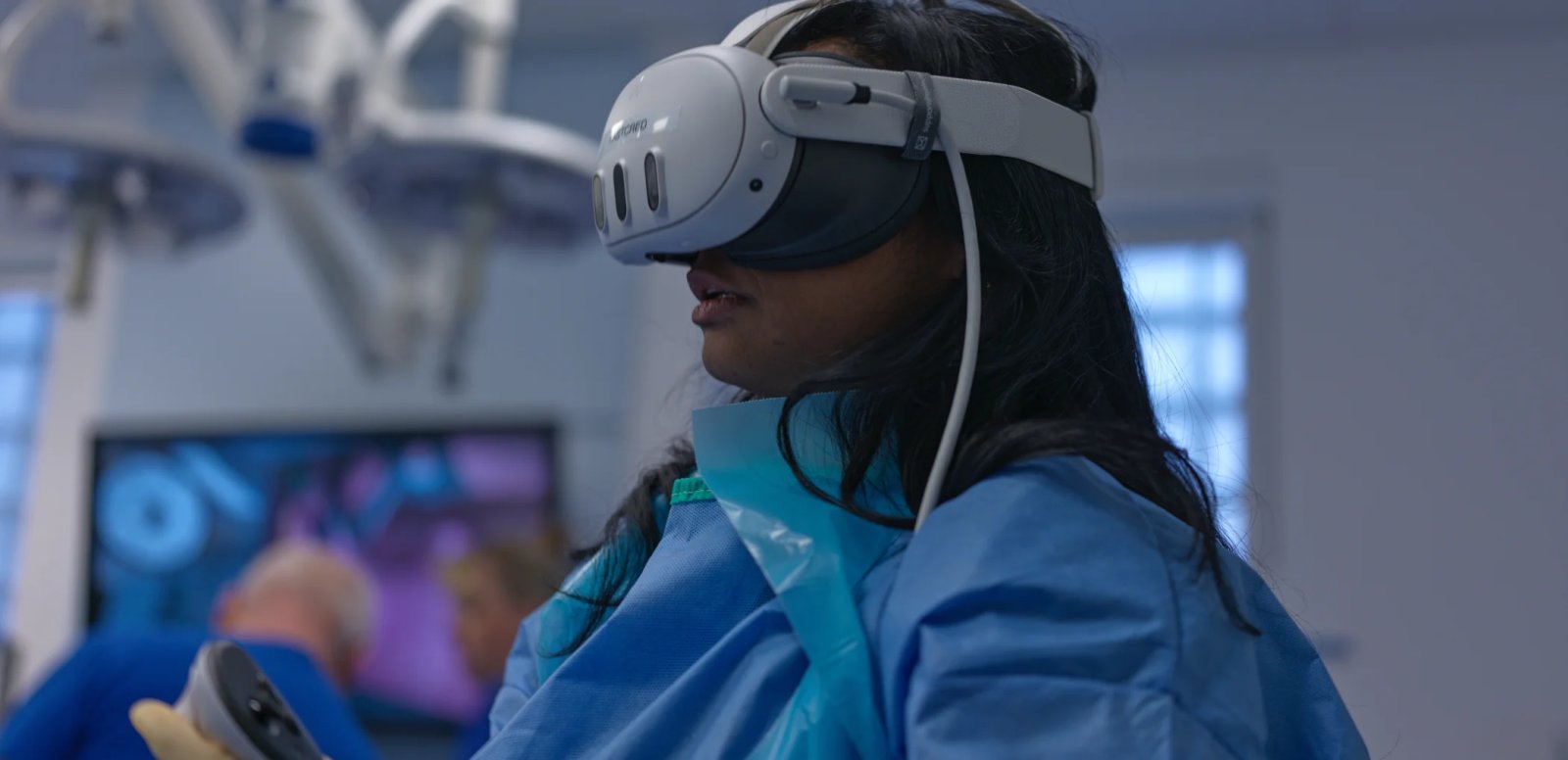
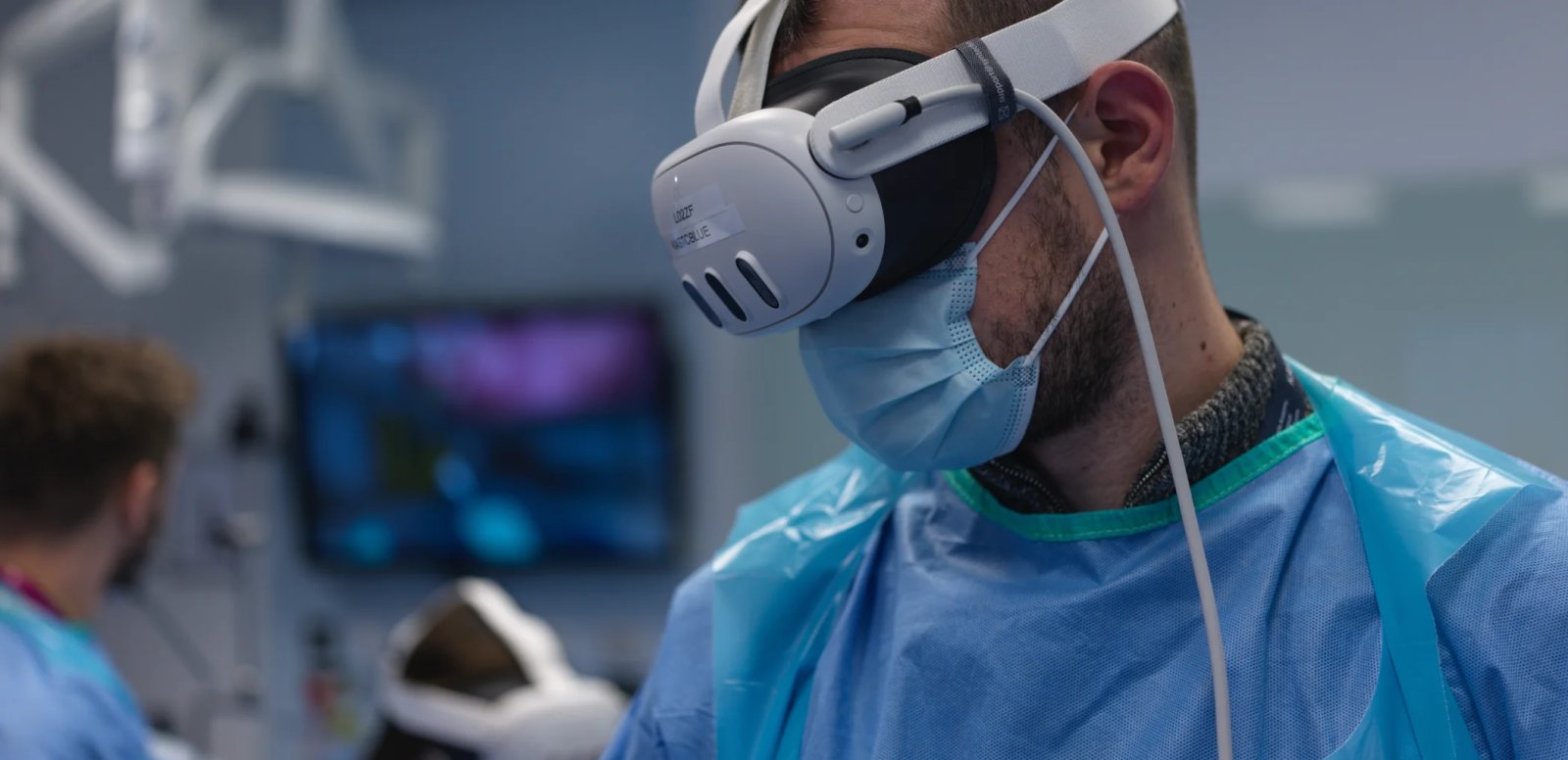
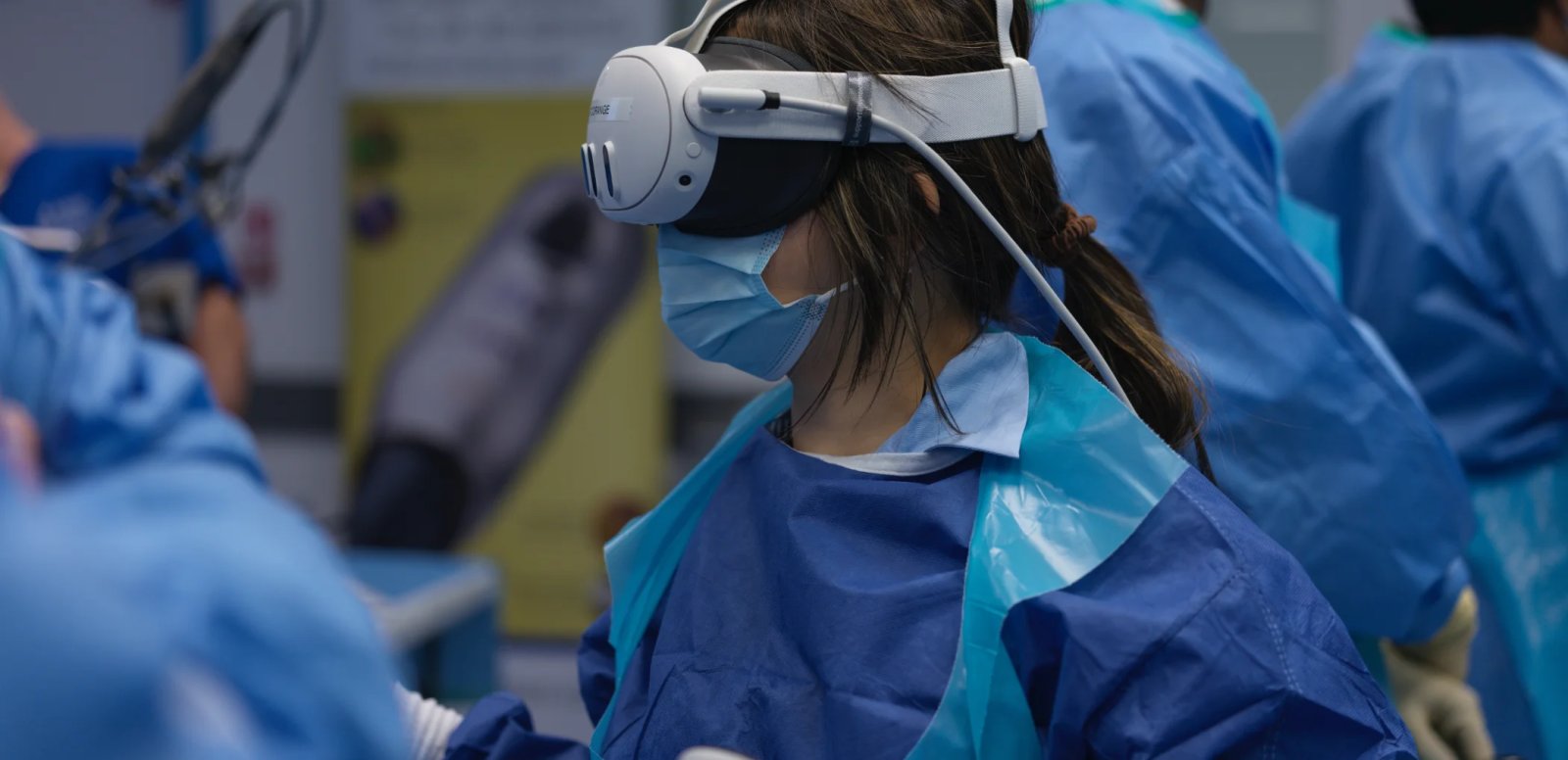
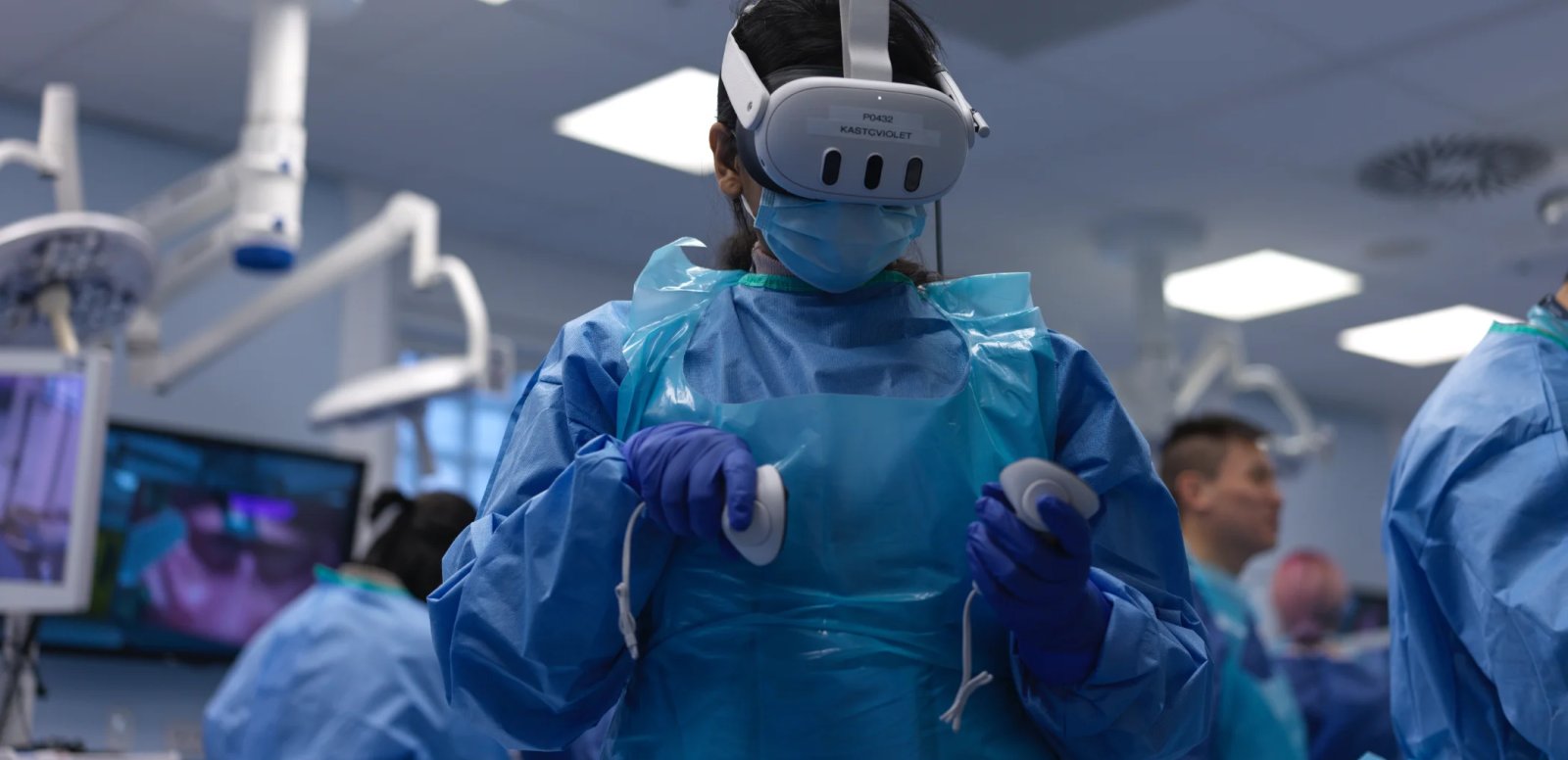
Both the availability and expense, plus cold-storage maintenance, of these assets are growing issues for medical schools educating the next generation of practitioners. They're also the areas Prof George was keen to test VR alternatives for, ready to showcase at the Endoscopic 3D Transoral Anatomy Dissection training day at Keele Anatomy and Surgical Training Centre in Jan 2025.
Prof George sought to create a VR 6DOF anatomy experience for users to learn how to dissect in the parapharyngeal space. This is especially important for trans oral surgeons using an endoscope, LASER or robot, as this surgery is relatively new. The anatomy approach is quite unfamiliar to many surgeons, he wanted to take the complexity out of this, giving surgeons a clear method of dissecting and operating in this space. The main aim was to create realistic simulations and walk surgeons through from initial incision to final exposure of the key muscular and vascular landmarks.
Developing Surgical Simulations
Our video production specialist, Nick Culley, worked with Prof George and his team to develop and build a bespoke VR simulation to be used for the course.
Establishing the key steps and sequences was essential to ensuring this simulation replicated a real-life scenario of what a dissector would do on a typical trans oral anatomy course in a lab.
“I have completed this process a thousand times but translating this into simple steps broken down into separate training experiences was an interesting challenge. In particular, getting the proportions of the anatomy correct was key, especially in the X, Y, and Z planes.
Working with the ExR animation team was a highlight for me, explaining anatomy to a skilled artist with no anatomical knowledge.”
Professor Ajith George is a professor of Surgery/Surgical Anatomy Education at Keele Anatomy and Surgical Training Centre
Once the VR simulations were created, we had to ensure the timeline of the whole experience was correct and tested this with a formal assessment from a surgical trainee doing a post graduate degree, conducting both quantitative and qualitative analysis. This was followed by governance and compliance checks to ensure the VR training was both educational and safe to teach.
VR Cadaveric Training
The VR training solution focused on ENT anatomy and transoral dissection, offering courses on:
- Introduction to transoral dissection
- Tonsil vessels
- Lingual artery
The full collection of these VR cadaveric training films can be accessed by clicking here.
To ensure the efficacy of the training, the simulations were evaluated by Mr Michael Eastwood (ENT Specialist Trainee, University of North Midlands). Studying twelve participants, whose expertise ranged from ST5 to post CCR fellow, using the Wilcoxon Sign Rank test, the study found a significant improvement in post teaching spotter test scores (P=<0.05). Average scores increased from 60% (range 10-100%) to 90% (range 60-100%). During the dissection all participants identified all 10 key structures with only 3 cases where an injury or incomplete dissection took place. The user study data was published in the British Association of Head and Neck Oncology.
How Virtual Reality is Improving Accessibility to Cadaveric Training
Four virtual experiences on key ENT cadaveric training activities are now freely accessible for Keele Anatomy and Surgical Training Centre’s students to use to support their medical training. Plus, to all working in the NHS– all you need is your NHS login to access ExR Education’s platform and watch our VR training films.
The project with Prof George has reduced the pressure on Keele University to source and finance cadavers, at a time when availability is a barrier to this core area of medical education. It's also showcasing how universities, anatomy, and surgical centres can enhance traditional medical training with advanced technologies and remote learning.
Jonny Abbas, our medical director and ENT surgical trainee himself, says:
“Surgical trainees in the UK receive a very small study budget, which often doesn’t cover the costs of cadaveric training courses. The more efficient we can make this education, the cheaper the courses will be”
“The VR training simulations are beyond what I had imagined, and we have published the user study data with the British Association of Head and Neck Oncology. The project was funded through our hospital charity and has attracted attention from the industry due to its educational components. We are planning a charity launch alongside patients who have benefited from this type of procedure knowledge over the last 9 years at UHNM. It’s a really exciting and proud moment for us to showcase this innovation. The feedback from the surgical courses has been phenomenal!”
Professor Ajith George is a professor of Surgery/Surgical Anatomy Education at Keele Anatomy and Surgical Training Centre
What’s Next for Medical VR Training at Keele University?
“I learnt so much more during this process on how to translate anatomical knowledge and steps into a VR experience. How to turn words into pictures and actions. We had to work very closely with the ExR team who always listened to all of our feedback and responded accordingly. We are definitely motivated to create more experiences like this. This will be the first of many projects with the ExR team. They are doing great things, and we are excited to be a part of it.”
Professor Ajith George is a professor of Surgery/Surgical Anatomy Education at Keele Anatomy and Surgical Training Centre
After the success of this surgical simulation, more VR training projects are already in the works with Keele University. Together, we plan to develop more cadaveric courses in other specialities, including orthopaedics, facial plastics, advanced airways and even air ambulance trauma.
Democratising Medical VR Education
Get in touch with us to apply virtual reality training at your university or medical school.


Want to join in?
Please type us a message.